
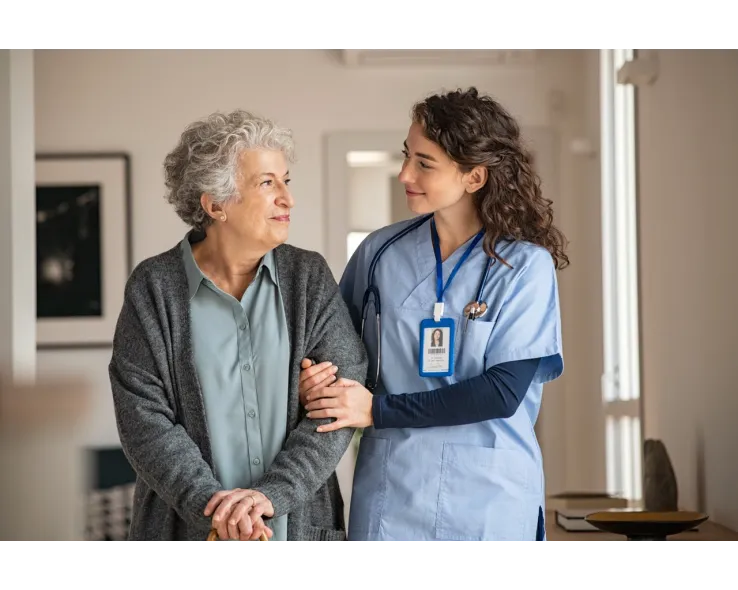
Care homes operate in environments where infection prevention and control in care homes is a constant priority. Residents are often more vulnerable to illness, facilities are shared, and there is regular movement of staff, healthcare professionals, and family visitors throughout the building.
Because of this, maintaining strong environmental hygiene is critical. Even with excellent housekeeping and cleaning protocols, care homes operate 24 hours a day, meaning the environment is always in use while cleaning typically happens at scheduled intervals.
This is where antimicrobial lighting technologies such as Biovitae are becoming increasingly valuable. By adding a continuous environmental hygiene layer, antimicrobial LED lighting can support infection prevention strategies already in place within care settings.
The Challenge of Infection Control in Care Homes
Care homes present unique infection control challenges. High occupancy, shared communal areas, and frequent contact between residents and staff can create conditions where infections may spread more easily.
Common concerns in these environments include:
MRSA and other bacterial infections
COVID-19 and respiratory viruses
Fungal skin infections
Cross-contamination in communal areas
Standard infection prevention strategies already include cleaning routines, hand hygiene, PPE, and infection prevention and control protocols (IPC). However, these approaches rely heavily on periodic interventions, meaning microbial presence can still increase between cleaning cycles.
Solutions such as disinfection lighting and antimicrobial LED light bulbs introduce an additional layer of environmental hygiene that works continuously within occupied spaces.
What Is Antimicrobial Lighting?
Antimicrobial light refers to lighting technologies designed to help reduce microbial presence in the environment while still functioning as normal lighting.
Some systems rely on ultraviolet light disinfection or UV antimicrobial light, but these technologies typically cannot be used in spaces occupied by people due to safety concerns.
Biovitae works differently.
Why Biovitae Stands Apart
Biovitae is the only technology that provides continuous sanitisation, it sanitises when people are inside the environments, so when the microbicidal action is most needed.
Unlike other technologies that use the single-frequency 405nm or other frequencies of blue light of the visible spectrum to sanitise environments and that must be used alternately in either the lighting function or in sanitisation mode (dual mode), Biovitae is able to perfectly integrate the lighting function.
It guarantees a white light indistinguishable from normal LED light while sanitising in a manner that is totally safe for people and animals.
Supporting Environmental Hygiene in Care Homes
Within care homes, Biovitae antimicrobial LED light bulbs can help support environmental hygiene in areas such as:
Resident bedrooms
Communal lounges
Dining areas
Corridors and walkways
Bathrooms and en-suite facilities
These are spaces where residents spend much of their time and where microbial contamination can naturally accumulate through daily activity.
Because Biovitae light operates continuously, it provides a persistent environmental hygiene layer that works alongside routine cleaning and IPC procedures.
This helps deliver:
Reduced cross-contamination risk in shared areas
Greater hygiene protection between cleaning cycles
Improved resilience against outbreaks
A stronger hygiene strategy supporting IPC standards
Importantly, Biovitae does not replace standard cleaning practices. Instead, it enhances them by providing a background hygiene measure that operates whenever the lights are on.
Strengthening Infection Prevention and Control in Care Homes
For care home managers and infection prevention teams, the goal is always to create safer environments for residents while maintaining operational stability.
Technologies such as antimicrobial lighting support this by helping reduce microbial presence in the environments where residents live, eat, and spend time.
By combining routine cleaning, IPC procedures, and continuous environmental hygiene technologies, care providers can strengthen their infection prevention strategies while improving overall resident wellbeing.
A Practical Step Towards Safer Care Environments
Care homes will always require robust cleaning procedures and infection control measures. However, as environments become more complex and infection risks continue to evolve, complementary technologies can provide valuable support.
Biovitae lighting offers a simple but powerful concept:
Sanitising an environment can be as easy as turning on the light.
By introducing continuous antimicrobial lighting, care homes can support stronger infection prevention and environmental hygiene while maintaining safe, comfortable living spaces for residents and staff.
If you are reviewing infection prevention and control within a care home environment or exploring ways to improve indoor air quality, you can get in touch with Objective Health to discuss how your organisation can strengthen its approach to infection control.