
Indoor air quality has become a growing priority for housing providers across the UK. Residents are spending more time indoors, properties are being upgraded for energy efficiency, and expectations around health, safety and building standards continue to rise.
At the same time, housing teams are managing tight budgets and increasing pressure to reduce complaints linked to damp, mould and poor ventilation.
The future of healthy homes is not about one single product or a costly, industrial-scale system. For most housing providers, the most effective approach is practical and layered.
Improving ventilation, monitoring indoor conditions, and using technologies that support safer shared environments can deliver long-term health benefits without disruptive building work.
This guide explains affordable steps housing providers can take to improve indoor air quality, and how combining ventilation, monitoring systems and Biovitae lighting can support healthier homes and stronger compliance.
Why Indoor Air Quality Matters in Housing
Indoor air quality affects comfort, wellbeing and long-term health.
Poor air quality can be linked to increased respiratory symptoms, disrupted sleep, headaches and irritation of the eyes and throat.
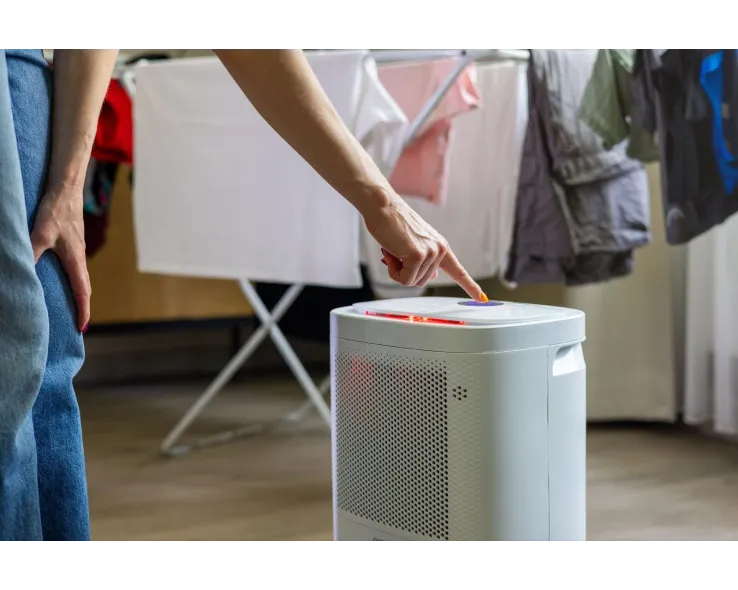
In homes where ventilation is limited, everyday activities such as cooking, showering, and drying clothes indoors can increase humidity and lead to condensation.
Over time, persistent moisture supports mould growth, which can then spread through spores in the air. Mould-related complaints are a major concern for housing providers, particularly where residents include children, older adults or those with asthma or other respiratory conditions.
Improving indoor air quality also supports wider organisational goals. It can reduce the frequency of reactive maintenance, improve resident satisfaction, and help demonstrate a proactive approach to property health and safety.
The Three-Part Approach: Ventilation, Monitoring and Environmental Support
Housing providers often see better results when indoor air quality improvement is treated as a system rather than a single intervention. A practical and affordable approach usually involves three elements:
Ventilation that reduces humidity and removes stale air
Monitoring that identifies risk before mould becomes visible
Environmental support that improves shared spaces and high-use areas
Each part plays a different role. Together, they support healthier living environments and more consistent standards across housing stock.
1. Ventilation: The Foundation for Healthier Homes
Ventilation is the core of indoor air quality improvement. Without adequate airflow, moisture and pollutants build up, particularly in bathrooms, kitchens and poorly heated rooms.
Affordable ventilation improvements can include:
Upgraded extractor fans with humidity sensors
Continuous mechanical extract systems in higher-risk homes
Improved trickle vents and airflow pathways
Clear resident guidance on using ventilation correctly
Smart ventilation is often the most effective option in housing because it reduces reliance on residents remembering to open windows or use fans. Systems that respond automatically to humidity changes can lower the risk of condensation and damp in a consistent way.
When planning ventilation upgrades, it is useful to prioritise properties with repeat damp reports, internal bathrooms, limited natural light, or known cold spots where condensation forms.
2. Monitoring Systems: Preventing Problems Before They Escalate
Monitoring is often overlooked, yet it is one of the most cost-effective tools housing providers can use. Sensors can track indoor humidity, temperature and air quality indicators, helping teams identify risks early.
Monitoring provides several practical benefits:
Identifies humidity patterns that lead to mould
Supports early intervention, reducing costly remedial work
Helps verify whether ventilation improvements are working
Provides evidence for tenant support and behaviour guidance
Supports compliance reporting and asset management decisions
In some cases, monitoring highlights that a property issue is linked to building performance rather than resident behaviour, which helps housing providers respond fairly and accurately.
For housing teams managing large portfolios, monitoring can support targeted investment. Instead of treating every home the same, resources can be focused where the data shows the highest risk.
3. Biovitae Lighting: Supporting Safer Shared Environments
Ventilation and monitoring address airflow and moisture, but housing providers also need to consider shared spaces and high-footfall areas where residents and staff move through daily.
Biovitae is a lighting technology designed to provide continuous sanitisation while operating as standard white light. It is intended to support cleaner environments when people are present, which is when microbicidal action is most valuable.
Unlike some light-based systems that operate in separate modes or require restricted use, Biovitae integrates lighting and sanitising functions at the same time. This makes it suitable for environments where continuous use is needed, including residential settings.
Biovitae can be particularly relevant for:
Communal corridors and stairwells
Reception areas and shared entrances
Laundry rooms and shared facilities
Office areas and staff rooms within housing operations sites
Care settings and supported living environments
For housing providers, the practical benefit is simplicity. Biovitae installs like a standard light fitting, requires no structural changes, and provides ongoing support in areas where people frequently pass through or gather.
It is not a replacement for ventilation. It works best as part of a layered strategy that improves air movement and supports environmental hygiene in shared spaces.
How This Supports Health and Safety Standards
Housing providers are expected to manage risks linked to damp, mould and ventilation, particularly where vulnerable residents may be affected. A structured approach supports compliance by showing that the organisation is taking reasonable, proactive steps to reduce risk.
Ventilation improvements help tackle the root cause of condensation and mould. Monitoring helps document conditions and support timely interventions. Biovitae supports safer shared environments, especially in buildings with high occupancy or communal facilities.
Together, these measures help housing providers demonstrate a responsible approach to resident wellbeing and property management, while supporting long-term maintenance planning.
Making Improvements Affordable and Scalable
The most sustainable strategy is one that can be rolled out across multiple properties without major disruption. Many housing providers start with a pilot programme, focusing on higher-risk blocks or areas with repeated mould complaints, then expand based on results.
A practical rollout might involve:
Installing humidity-triggered extraction in bathrooms and kitchens
Deploying monitoring sensors in high-risk properties or blocks
Installing Biovitae in communal areas and shared access points
Reviewing data and resident feedback after 8 to 12 weeks
Expanding the programme across similar property types
This approach supports measurable improvements without relying on large-scale capital projects.
How Objective Health Can Help
Objective Health supports housing providers and organisations seeking practical solutions to improve indoor environments and resident wellbeing.
We supply Biovitae lighting and can advise on where it fits most effectively within a wider indoor air quality strategy. Whether you are looking to improve communal areas, reduce complaints, or strengthen your approach to healthier homes, our team can help you build a solution that is realistic, affordable and scalable.
You can learn more about Biovitae here, or contact our team to discuss your needs and priorities.