
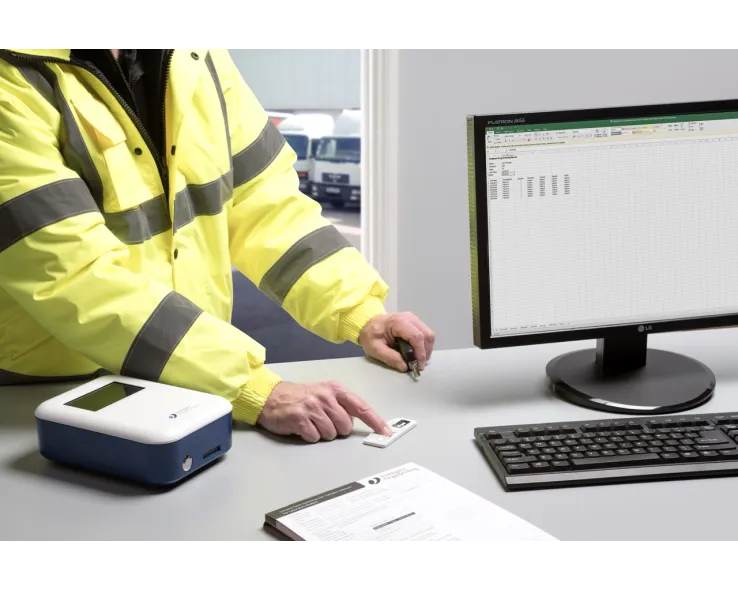
Fingerprint drug testing is increasingly being used by employers as part of workplace drug and alcohol policies.
For organisations looking for a faster, cleaner and less intrusive testing method, it offers a practical alternative to more traditional approaches.
As with any form of workplace testing, reliability is critical. Employers need confidence that results are accurate, consistent and appropriate for safety-related decisions.
Understanding how fingerprint drug testing works, and what it can and cannot tell you, is an important part of using it responsibly.
Fingerprint testing focuses on recent drug use and is designed to support fitness-for-work assessments rather than long-term lifestyle monitoring. When used correctly and supported by clear procedures, it can play a valuable role in maintaining safe working environments.
What Fingerprint Drug Testing Is Designed to Detect
Fingerprint drug testing is used to identify recent drug use, not historical exposure.
It works by analysing trace amounts of sweat that naturally collect on the fingertips. When certain drugs are used, their markers are present in that sweat for a limited period of time.
This means fingerprint testing is well suited to situations where employers need to understand whether drug use may affect someone’s ability to work safely on a given day or shift.
It is commonly used as part of fitness-for-work checks, post-incident screening, and during a return-to-work process.
How the Testing Process Works in Practice
The process itself is simple. The individual places their fingertips onto a small collection cartridge under supervision. This takes only a few seconds and does not involve bodily fluids.
The cartridge is then analysed using a dedicated reader, with results available shortly afterwards. Where workplace policy requires it, samples can be retained and sent for laboratory confirmation.
Because the collection process is observed and controlled, the risk of interference or substitution is minimal.
This is one of the reasons fingerprint testing is viewed as a reliable screening method in workplace settings.
Reliability in The Workplace
Reliability in workplace testing is not just about technology. It is about consistency, control and suitability for the environment in which the test is used.
Fingerprint drug testing systems are designed to deliver repeatable results when:
Approved cartridges and readers are used
Testing procedures are followed correctly
Staff administering tests are trained
Results are handled in line with policy
Used this way, fingerprint testing provides employers with dependable screening information that supports safety decisions without unnecessary intrusion.
It is important to recognise that fingerprint testing is a screening tool.
As with other workplace drug tests, non-negative results can be followed up through confirmatory laboratory testing where required.
How Fingerprint Testing Compares to Other Methods
Fingerprint testing differs from traditional methods in both detection window and practicality.
Urine testing can detect drug use over several days, but it is intrusive and requires controlled facilities. Saliva testing is quicker but still involves bodily fluids and may cause discomfort or resistance among staff. Hair testing identifies long-term patterns of use but does not indicate current impairment.
Fingerprint testing focuses on recent use and can be carried out quickly in operational settings. For employers managing safety-sensitive roles, this makes it a practical option where speed, hygiene and consistency matter.
Legal and Policy Considerations for Employers
Employers have a duty under health and safety legislation to manage risks associated with substance misuse at work.
Any drug testing programme should be supported by a clear and well-communicated policy.
That policy should explain:
When and why testing will take place
Which testing methods are used
How results are handled and stored
What happens if a result is non-negative
How employee confidentiality is protected
Fingerprint drug testing fits well within structured workplace policies because it is repeatable, easy to administer and suitable for use across different sites and shifts. As with all testing methods, results should be used proportionately and supported by appropriate follow-up processes.
Building Trust Through Consistent Testing
Reliability is not just about producing a result. It is also about how testing is perceived by employees.
Consistent procedures, clear communication and fair application all help build trust in workplace testing programmes. When staff understand why testing is in place and how it is carried out, it is more likely to be accepted as a safety measure rather than a punitive one.
Using fingerprint drug testing as part of a wider occupational health strategy helps reinforce that focus on safety, wellbeing and prevention.
How Objective Health Can Support Your Workplace
Objective Health works with employers across the UK to deliver drug and alcohol testing solutions that are practical, compliant and suitable for workplace use.
Our fingerprint drug testing systems are designed for professional environments and supported by clear guidance and training.
Whether you are introducing testing for the first time or reviewing an existing policy, our team can help you choose the right approach and ensure testing is carried out consistently and responsibly.
If you would like to discuss fingerprint drug testing or explore how it could fit into your workplace policy, get in touch with Objective Health today.